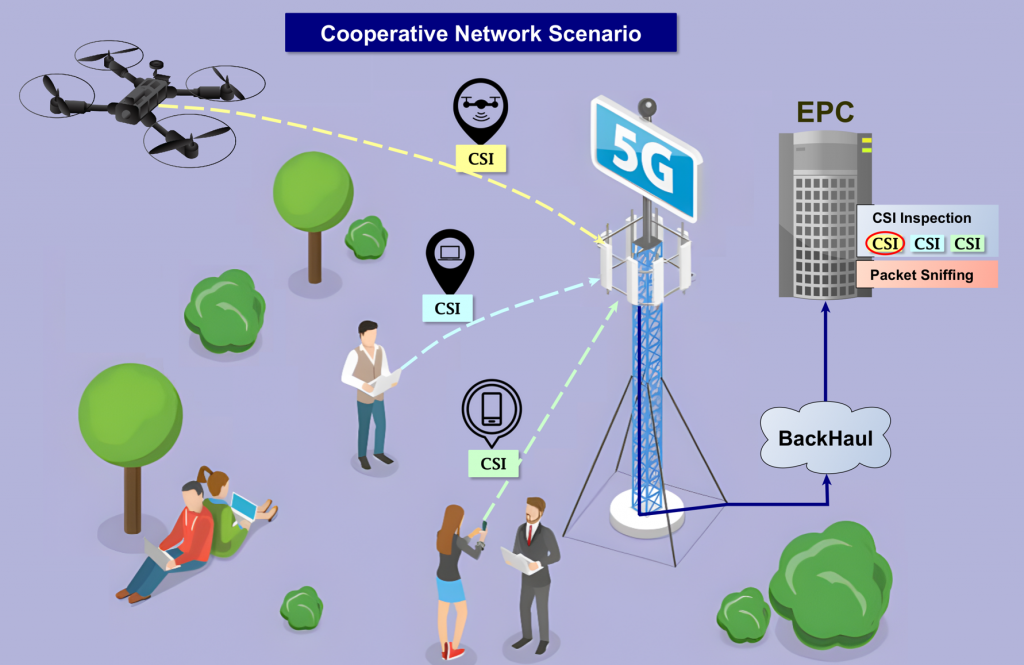
As the technology evolves, the use of cellular networks for drone control is likely to become more prevalent, especially in applications where the benefits outweigh the challenges. This scenario assumes control of, or cooperation from, the cellular network to acheive the following:
Detect and identify UAVs using cooperative cellular networks
Differentiate legitimate and malicious UAVs
Enable large-scale, real-time monitoring through cooperation
Integrate sensing and communication (ISAC/JCaS)
Automate data reduction and intelligent reporting
Uncooperative Networks
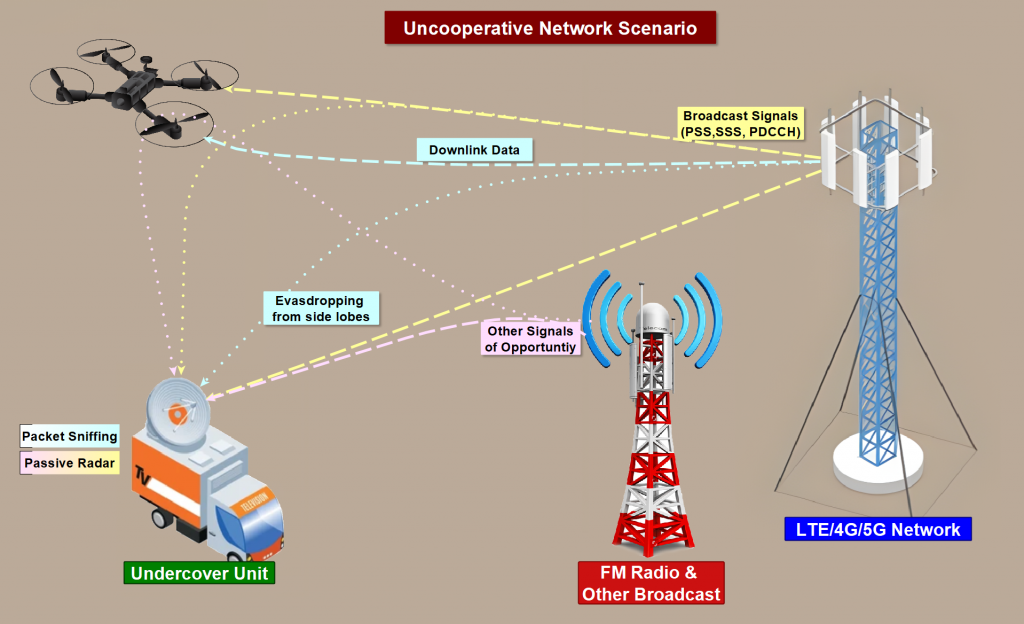
For cases where the cellular network is not yet capable or unwilling to provide assistance in drone detection we have formulated the Uncooperative Network Scenario, which will investigate the following:
UAV Detection Using Non-Cooperative Cellular Signals
Passive Radar Based on Signals of Opportunity
Exploitation of Broadcast Signals for UAV Detection
Doppler-Based Identification of UAVs via Passive Sensing
Signal Selection and Dataset Generation
Validation of Passive Radar Performance with Large UAVs
UAV Detection via UE Scanners and other Network Monitoring Tools